
In the age of climate boiling: Actors committed to a just energy transition and sustainable climate resilience
Two weeks after the Bonn Intermediate Sessions and 5 months before the Conference of
Parties of Baku, the conclusions of the sixtieth session of the Subsidiary Body for Implementation
work (SB60), leave us once again worried. The slowness with which discussions
progress does not correspond to the urgency of the climate crisis we are facing
confronted. While it is clear that climate action must accelerate during this
crucial decade, discussions in Bonn on how to achieve this remained focused
death.
Unfortunately, this indicates a glaring lack of political will to move to
scale and take the necessary action in the face of the climate emergency that
impacts both the living conditions of communities and the economies of the most
vulnerable especially those on the African continent. This situation is particularly
of concern to Africa, which despite its small contribution to global emissions makes
facing structural and systemic challenges that make it difficult for the continent
to make significant progress in development.
Unfortunately, it is obvious that this last summit is taking us further and further away from
the objective of limiting global warming to less than 1.5°C. The main reason is
that rich countries reverse their financial commitments. It is therefore necessary that the
african leaders are coordinating their efforts to get the world back on track for the
climate justice and a just energy transition. For the Director of Natural Justice
Dakar hub Sokhna Dié KA DIA "Putting equity at the heart of the energy transition
is to ensure that all social strata, all sectors of the economy and all
territories are taken into account throughout the process ”.
Next year, countries are expected to present their next set of climate plans
five-year nationally, called Nationally Determined Contributions (NDCs), which
form the foundation of the global collective effort to combat change
climate change. These plans are now under threat. Indeed, developing countries have not
no guarantee that the climate finance that has been promised to them and that finances the NDCs
will be there.
For Emmanuel Seck Director of ENDA ENERGIE "We have a lot of work to
accomplish before Baku if we want COP29 to bring what our people have
need. It is necessary for the parties to move up a gear and assume their
responsibilities for action and support. The climate crisis is a problem
that requires a cooperative response. Solidarity is vital; we can't
face alone. That's the challenge of this climate week to mobilize both the
local actors as regional actors to co-construct suitable sustainable solutions
to the expectations of the communities, but also to develop a strategy for political influence by
view of COP 29 "
During this decade of indescribable urgency, developed countries must provide
an order of magnitude of additional funding. We all know that without
climate finance, there is no climate action. COP29 needs to set a new target
for financing the fight against climate change. For years, the
parties discuss it without getting close to an agreement. It is therefore important that the parties
bridge their differences on the new financial goal – the new collective goal
quantified, for example – including clarifying which funding is new and
additional in order to constructively implement the global inventory and
strengthen Nationally Determined Contributions (NDCs). Khar Ndiaye, the Director
d’Oxfam au Sénégal rappelle ainsi que « la vigilance doit toudays être de mise : le
climate finance provided and mobilized under the new financial objective must not
not increase climate vulnerability or deteriorate the adaptation prospects of
communities anywhere in the world. It will be necessary to ensure that it does not
does not contribute to increasing inequalities, increasing emissions, the use of
fossil fuels or promote false solutions. ”
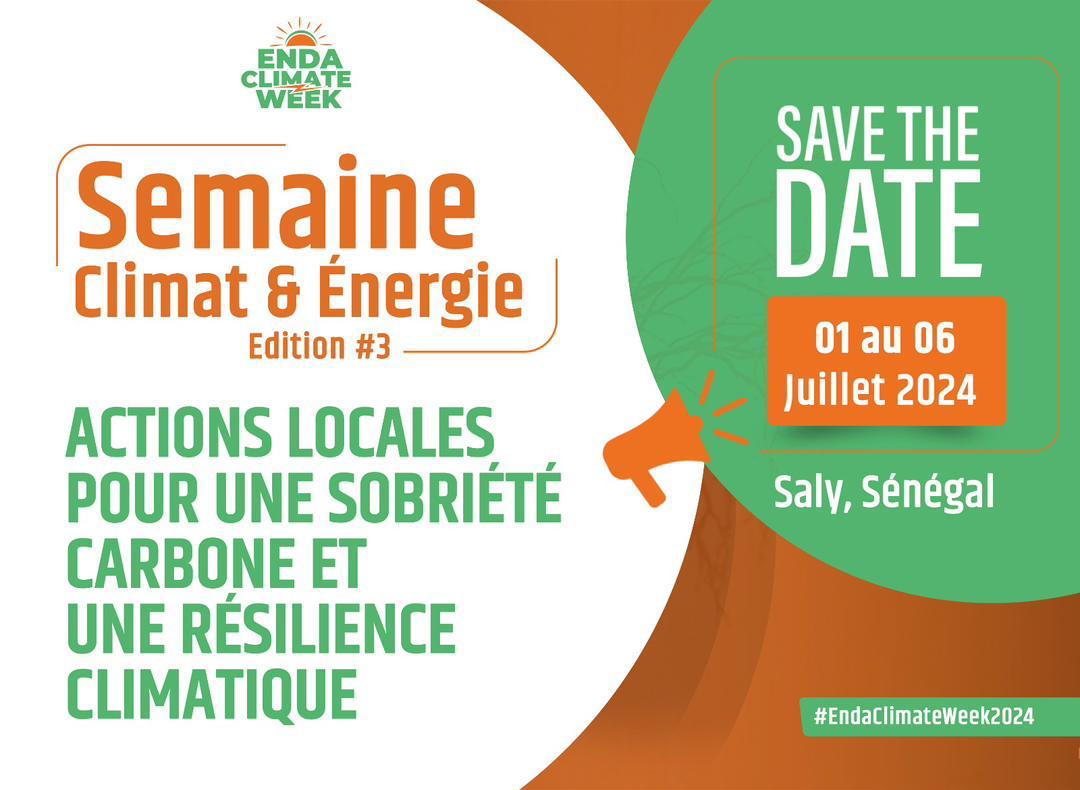
The Climate and Energy Week scheduled for 01 to 06 July 2024 in Senegal (Saly), is intended to be a
framework to promote local solutions and to promote good practices in the fight against
the adverse effects of climate change, in contexts of systemic transitions,
with a view to consolidating efforts towards more sober and resilient societies
climate change.