
Transition énergétique et agriculture durable : Vers un Sénégal résilient face au changement climatique
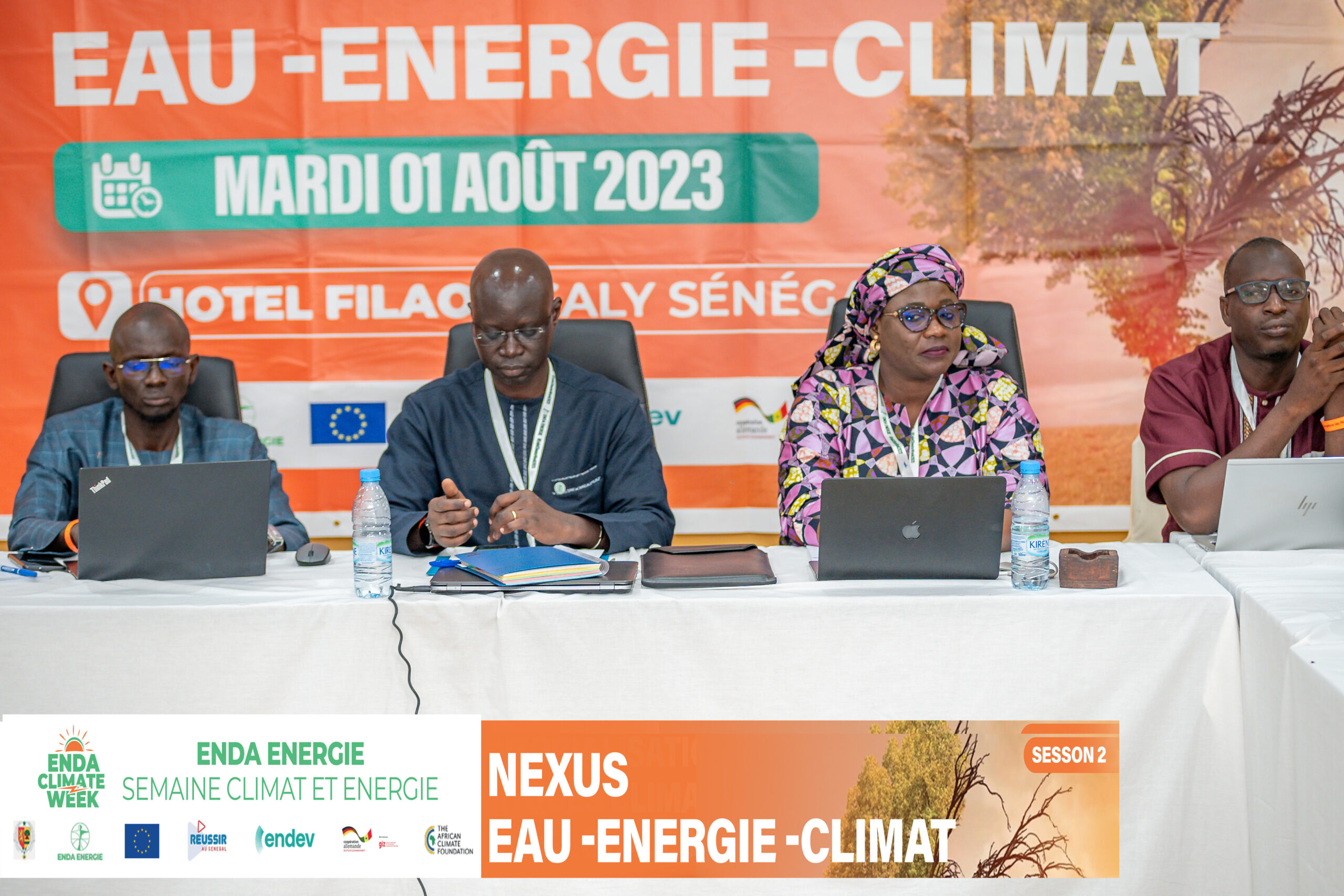
The second day of the ENDA ENERGIE Climate Week, held on 1 August 2023, was marked by rich and interactive exchanges on the crucial theme of the Energy-Water-Climate Nexus. This day, led by field actors, national partners and representatives of international institutions, highlighted the essential contribution of renewable energies to Senegal's sustainable development.
Kader Diop de l’Agence Nationale pour les Energies Renouvelables (ANER), a mis en avant l’importance des énergies renouvelables, notamment l’énergie solaire et éolienne, ainsi que la biomasse. Il a souligné que la diversification des sources d’énergie permettrait d’améliorer l’accès à l’électricité, la chaleur et le gaz dans tout le pays. Des initiatives telles que l’installation de panneaux solaires ont déjà eu un impact significatif dans des zones jusque-là négligées.
A representative of the Ministry of Livestock, Mr. Famara SARR, raised the challenges faced by pastoralists, such as conflicts between pastoralist communities, the management of waste produced by slaughterhouses and problems of access to water in times of drought. He called for supporting producers by setting up renewable energy projects tailored to their specific needs.
The installation of solar panels in previously neglected areas has shown that solar energy has a positive impact, even in the most remote areas of the country. Diversification of energy sources, including the use of biomass, opens up new opportunities for access to electricity and gas, and strengthens communities' resilience to climate change.
Renewable energy can be an answer to these challenges. Using solar energy for irrigation and animal watering systems can improve livestock productivity and resilience. In addition, offering sustainable alternatives to women who currently use wood to cook their fish products can reduce deforestation and promote environmentally friendly agriculture.
The plenary dialogue was devoted to lessons learned and prospects for the development of agricultural value chains, with a particular focus on the dairy sector. Projects such as PROGRESS LAIT, DOYLU 1 & 2, and B.ENERGY were presented, highlighting the need to improve preservation and packaging equipment to meet the requirements of today's markets.
The moving testimonies of beneficiaries of milk processing and agriculture programmes illustrated the positive impact of these initiatives on local communities. The training of 1,400 young people in the agricultural sector was also hailed as a step towards more sustainable and resilient agriculture.
The second day of ENDA ENERGIE's Climate Week showed that energy transition and sustainable agriculture are essential for a resilient future in Senegal. Renewable energy can transform the lives of local communities by providing sustainable energy solutions and enhancing food security.
However, to make these projects a reality, close collaboration between institutions, national and international partners, as well as local authorities is needed. Access to climate funds is an opportunity to finance these green initiatives and foster the transition to a more sustainable and resilient future.
Climate funds are available to support these green projects, and it is now up to institutions and communities to seize these opportunities for a greener and more prosperous future in Senegal.
ENDA ENERGIE Climate Week continues with other exciting events, and there is no doubt that the ongoing discussions and initiatives will continue to advance the climate cause in Senegal and beyond.