
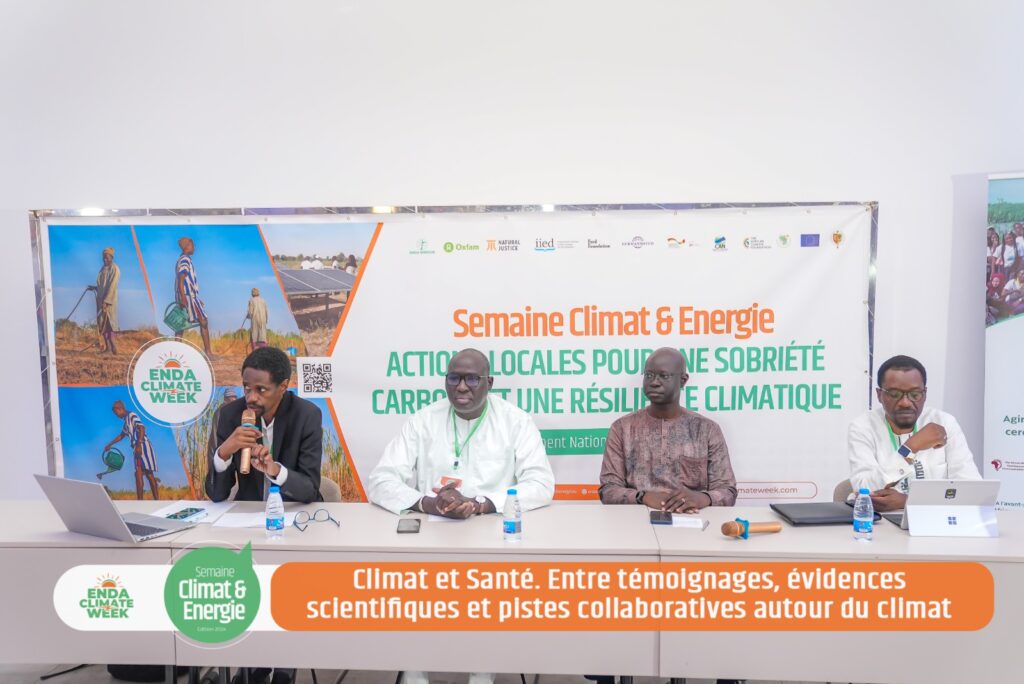
The effects of climate change are found in all sectors of life and in all localities of the world. Health is not spared by this phenomenon, which has finally imposed itself on all humanity. This is so that the third day of Enda Energie's climate week takes care of this aspect in its reflections, which worries more than one specialist.
At the opening of the session dedicated to the climate-health issue, the Executive Secretary of Enda Energie, returned to the link between these two concepts which are at the heart of the existence of man on earth.
"The Climate-Health theme seeks to highlight the points of junction between climate and health. The climate issue is not only an issue that affects the environment, it affects all sectors," explains Emmanuel Seck.
And according to Libasse Ba national climate change committee (COMNACC) "health is a priority in Senegal's NDC. After engaging with the international community, Senegal has marked the health sector with important prospective studies".
And Barnabé Ngning, the representative of the Ministry of Health "climate issues on health are familiar to the Ministry of Health which has a climate-health committee. During the COP in 2023, health was the subject of a day".
This climate-health relationship is more highlighted by the rise in temperature, which has significant consequences on the health of populations.
"The phenomenon of rising temperatures has consequences for the prevalence of malnutrition. If nothing is done and with temperatures of 1.5° to 2.5°, this malnutrition will affect the health sector" adds Libasse Ba.
In Senegal, this heat wave is felt over two specific periods, according to Ms. Bathily of ANACIM. "This heatwave issue generally takes place between March and June as well as between October and November," she reveals before specifying "a heatwave does not have the same health impact in Dakar as in Matam".
This is why Mamadou Ndong Touré of the NGO Save The Children explains "a nurse in Kédougou must be trained so that he can recognize the links between climate effects and certain pathologies".
However, Antoine Faye, a member of the COMNACC, puts a caveat to all this and believes "heat waves are not a problem for us, we must instead focus on the fight against malaria".
By Abdou Karime LO
Source
http://www.galsen7.com/2024/07/semaine-du-climat-limpact-du-climat-sur.html?m=1
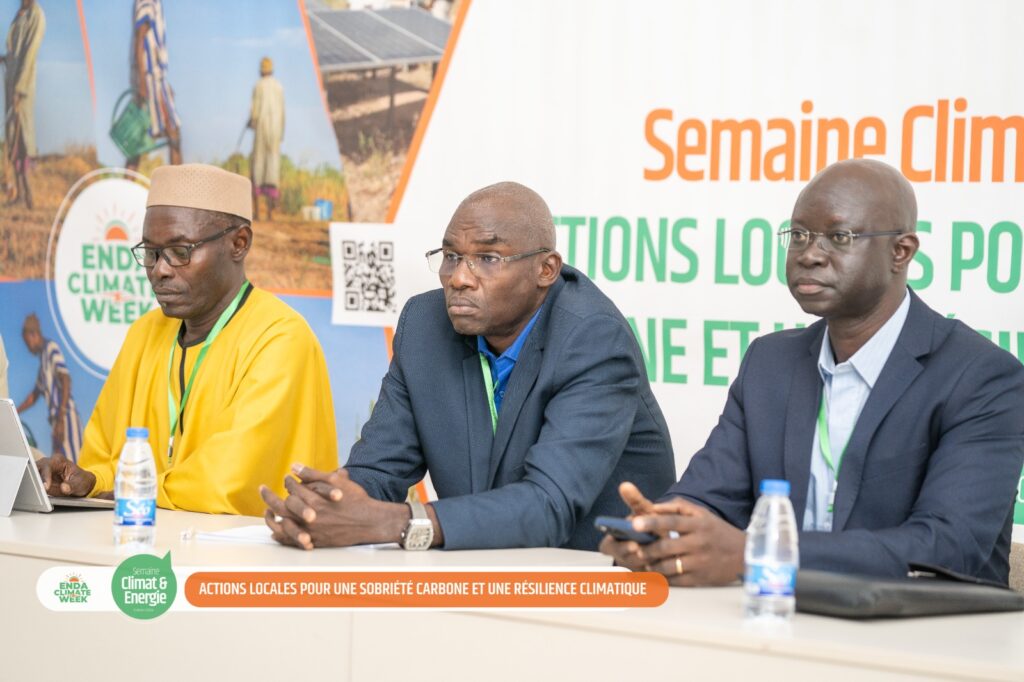
The third climate week started this Monday, July 01, 2024 in Saly. The theme of this Enda Energie initiative is “Local Actions for Carbon Sobriety and Climate Resilience”. This activity is taking place a few months before the COP 29 to be held in Baku.
“We have a lot of work to do before Baku if we want COP29 to bring what our people need,” said the Executive Secretary of Enda Energy.
And according to Emmanuel Seck "the parties must move up a gear and assume their responsibilities in terms of action and support. The climate crisis is a global problem that requires a cooperative response.”
“Solidarity is vital; we can't deal with it alone. This is the challenge of this climate week to mobilize both local and regional actors to co-construct sustainable solutions adapted to the expectations of communities, but also to develop a political influence strategy for COP 29," he explains.
On the same note, Sécou SARR, Executive Secretary of ENDA Tiers Monde believes that "Senegalese society, like that of the southern countries, is suffering from the effects of climate change given their high level of vulnerability. We need to act faster and now. Hence the requirement to build new trajectories taking into account both urgent and future needs.”
The work of this climate week will continue until Saturday, June 06 around the promotion of local solutions and the valorization of good practices to fight against the harmful effects of climate change.
By Abdou Karime LO
Sourcehttp://www.galsen7.com/2024/07/enda-climate-week-une-semaine-reflexion.html
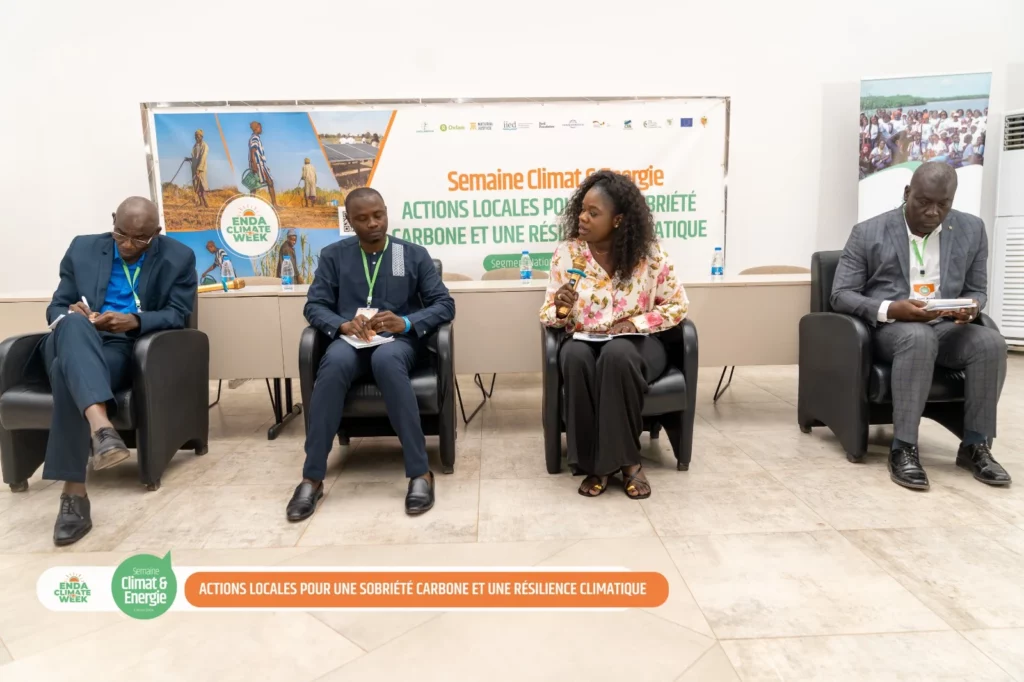
The first day of the climate week organized by Enda Energie brought together experts to discuss the possibility of a national mechanism with an optimal governance framework for local authorities. The diagnosis of green financing in these communities was a central point of the discussions.
Mamadou Ndiaye, of the Municipal Development Agency, welcomed the momentum underway to support local authorities in the face of the effects of climate change. However, he identified budget nomenclature as the main barrier to community access to green finance. According to him, "we have a budget nomenclature that dates back to 1972, and it is now obsolete".
Aliou Ndiouck, from the city of Pikine, highlighted the weakness of local authorities in the implementation of climate plans. He insisted on the need to strengthen the organizational and financial capacities of communities, saying that "only then will decentralization have a real impact on populations".
Simon Sambou proposed the establishment of a new funding mechanism for local authorities. “It is imperative to create a new funding mechanism that allows local authorities to have a climate-focused budget,” he suggested.
By Ankou SODJAGO
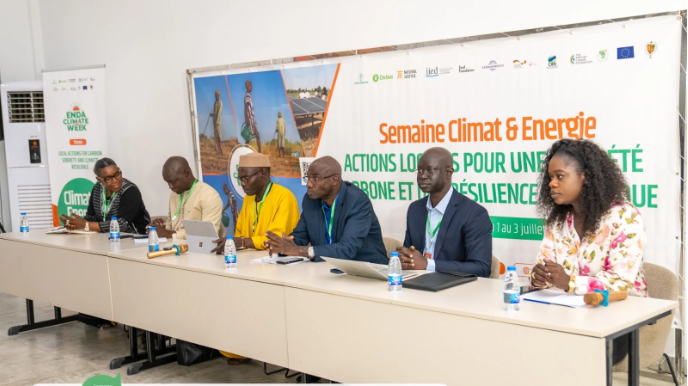
The third week dedicated to climate began on Monday, July 1, 2024 in Saly, under the aegis of Enda Energie. This initiative focuses on the theme “Local Actions for Carbon Saving and Climate Resilience”, paving the way a few months ahead of COP 29 in Baku.
“We have a lot of work to do before Baku if we want COP29 to meet the needs of our people,” stressed the Executive Secretary of Enda Energie.
Emmanuel Seck added: “It is imperative that the parties accelerate and assume their responsibilities for action and support. The climate crisis is a global challenge that requires a collective response.”
“It is essential to promote solidarity; we cannot meet this challenge alone. This is the whole objective of this climate week: to mobilize both local and regional actors to co-construct sustainable solutions adapted to the needs of communities, while developing a strategy for political influence in view of COP 29," he explained.
In the same vein, Sécou Sarr, Executive Secretary of ENDA Tiers Monde, stressed that "Senegalese society, like those of the countries of the South, is suffering the devastating effects of climate change because of its great vulnerability. We need to act quickly and now, building new trajectories that meet immediate and future needs.”
The work of this climate week will continue until Saturday, July 6, focusing on the promotion of local solutions and the valorization of good practices to fight against the harmful effects of climate change.
By Ankou SODJAGO
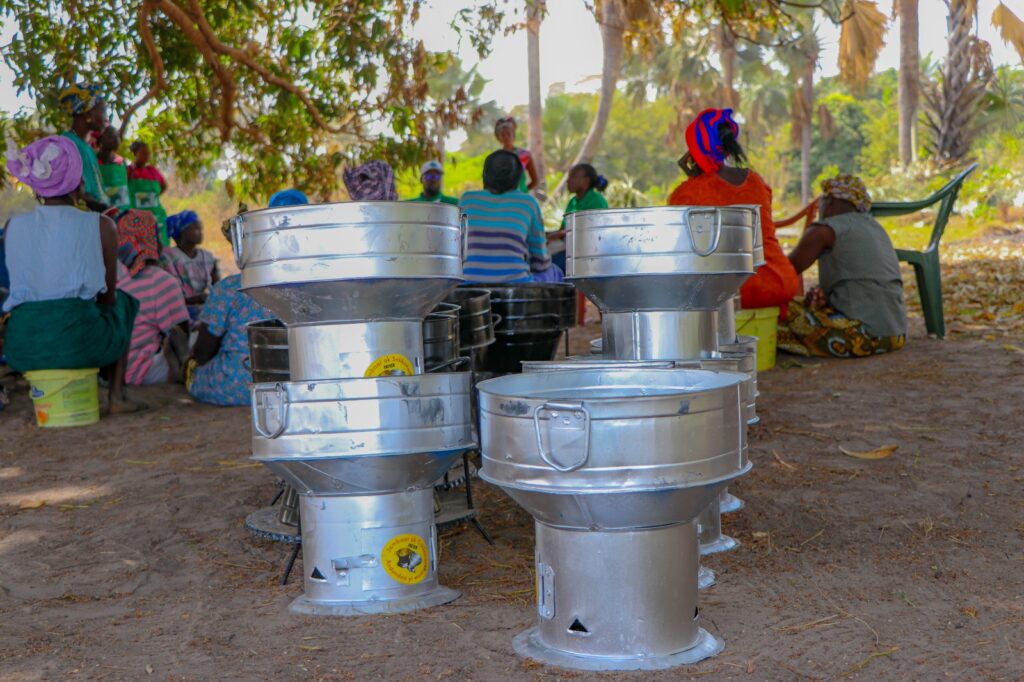 In the fight against rising greenhouse gas emissions, improved stoves commonly referred to as Diambar stoves play an important role because households contribute heavily to this emission. On the second day of the climate week initiated by Enda Energie, experts and local populations discussed the ins and outs of these improved stoves.
These improved fireplaces are part of the project to promote climate-friendly cooking initiated by ENDEV/climate green background. According to Mm Viviane Sagna Ciss, this project funded by the German federal government and the Green Climate Fund with the contribution of the State of Senegal and Kenya "has the primary objective of participating in the reduction of greenhouse gas emissions at the household level".
And to facilitate access to these improved stoves, "12 production units are being set up across the country, as well as the provision of transport means to these producers," she explains.
And for Pierre Thiaw of Enda Energie "on an 8053 GPF objective to raise awareness, we reached 8269 GPF or 103% compared to the initial objective". And according to him, 8,845 villages were affected out of 8,053 targeted villages, i.e. 85% of our initial target ".
Mm Awa Diop Diédhiou is president of GPF at the level of the Kolda region, she explains the process of penetration of improved stoves in her locality.
"It is through a culinary demonstration that we know the importance and effectiveness of Diambar stoves and after the demonstration all the members of our group have made their orders and this is how we have since used this in our households".
And Mm Diédhiou added "subsequently we raised the awareness of our neighbours, other groups and solidarity funds at the neighbourhood level who have since appropriated the improved fireplaces which in reality reduces greenhouse gases, but also fights against deforestation in the locality".
Access to these shelters is no resting place for these women. "Our first difficulty is the high cost of Diambar stoves, but also the lack of storage stores because we live in Casamance and it rains a lot," she explains.
Added to this, Mrs. Awa Diop Diédhiou and the GPFs of the Kolda region deplore the lack of support from local authorities in their locality.
by Abdou Karime LO
source: http://www.galsen7.com/2024/07/enda-climate-week-le-role-des-foyers.html
2nd edition "Climate and Energy Week": Non-state actors involved in a just transition
Launch Second edition of Climate Energy Week organized by ENDA ENERGIE (By Jotayu Senegal)
Quelle est la pertinence et l’importance de prendre en compte la dynamique de l’adaptation épousée par les communautés et comment l’intégrer dans la Contribution déterminée au niveau national (CDN) mais aussi tout ce qui est Plan national d’adaptation ? Comment avoir une vue globale de la situation de la gouvernance climatique au niveau du Sénégal, quels sont les défis auxquels les acteurs sont confrontés, les obstacles, les opportunités par rapport à l’action climatique ?
C’est au tour de ces interrogations que Enda Energie, en collaboration avec l’Institut de recherche sur les politiques en Afrique, en anglais : Africa policy research institute (APRI) organise, dans le cadre de la « Semaine climat et Energie » de l’Organisation non gouvernementale (ONG) Enda Energie à Saly (Mbour) un atelier multi-acteur de partage des résultats du projet sur l’adaptation dirigée localement avec pour thème : « Adaptation au changement climatique au Sénégal : stratégies, initiatives et pratiques : Enjeux et orientations au Sénégal ».
A cet effet, APRI lance un rapport basé sur une étude complète de l’adaptation locale à travers le Sénégal. Dans le dessein de soutenir le Sénégal dans la gestion des défis de mise en œuvre des CDN et intégrer les besoins des communautés en termes d’adaptation dirigée localement, APRI, en étroite collaboration avec Enda Energie, a réalisé des recherches sur les politiques d’adaptation au changement climatique, les stratégies et les actions locales dans tout le pays.
APRI a, au cours de l’atelier qui devrait se tenir à Dakar le 3 août 2023, estimé que, pour faire avancer les solutions climatiques axées sur les priorités et les besoins spécifiques du pays et qui sont cohérentes avec les pratiques d’adaptation endogène, les experts ont échangé sur les résultats de la recherche, examiné les lacunes dans la mise en œuvre des politiques climatiques et d’autres cadres et stratégies nationaux et locaux afin de mieux comprendre les défis et les opportunités par rapport à l’action climatique.
De l’avis du Dr Grace Mbungu, responsable du programme changement climatique à APRI, « le rapport présente les résultats des recherches sur les politiques d’adaptation au changement climatique, les stratégies et les actions locales au Sénégal et particulièrement en Afrique de l’Ouest. Il met en évidence les stratégies d’Adaptation dirigée localement (ADL), les pratiques et les enseignements qui peuvent informer et guider la mise en œuvre des CDN et des actions climatiques au niveau local et national ».
« La mise en œuvre du projet s’est appuyée notamment sur trois méthodes à savoir l’examen et l’analyse de documents pertinents tels que les CDN, le Plan national d’adaptation (NAP), les politiques d’adaptation, la planification des politiques nationales et locales de développement, la gouvernance climatique, l’adaptation dirigée localement… en vue de cartographier les initiatives nationales d’action climatique en mettant l’accent sur la conception et la mise en œuvre des CDN à travers la perspective de l’adaptation dirigée localement ; la consultation des parties prenantes à différentes échelles et catégories d’acteurs y compris des deux ateliers de consultation et de partage avec les parties prenantes et enfin, l’analyse approfondie axée sur les secteurs d’adaptation prioritaires clés comprenant, dans un premier temps, la sécurité alimentaire dans le village intelligent face au climat de Daga Birame, dans un second temps, le projet REVARD sur le contrôle de l’érosion côtière sur l’île de Dionewar, dans un troisième temps, l’initiative de Système d’alerte précoce (EWS) de Widou Thiéngoly concernant l’atténuation des impacts sanitaires des vagues de chaleur et dans un quatrième temps, l’analyse qualitative des données et des informations collectées avec toutes les méthodes appliquées », a renchéri la responsable du programme changement climatique à APRI.
Mais le rapport fait ressortir quelques lacunes, selon un document transmis à la presse. D’après ce document, « les options d’adaptation pour les secteurs prioritaires n’intègrent pas encore suffisamment les pratiques et stratégies d’adaptation dirigée par les communautés locales. Derrière cette faible intégration des besoins d’adaptation dirigée par les communautés, se trouvent d’énormes obstacles liés au financement. Le fait que la gouvernance climatique peine à être décentralisée ou intégrée au niveau territorial est également une contrainte significative ».
Pour sa part, le responsable climat et transition systémique à Enda Energie a confirmé que « les besoins de financement pour mesures d’adaptation au changement climatique associées aux CDN (14,5 milliards de dollars d’ici à 20230) dépassent les capacités du budget national et dépendent largement de la contribution des partenaires techniques et financiers (12,725 milliards de dollars). Ainsi, les incertitudes quant à la mobilisation des fonds climatiques compromettent non seulement les engagements du Sénégal pour lutter contre le changement climatique et accéder au financement pour que les communautés puissent mettre en œuvre leurs stratégies et pratiques locales d’adaptation, mais aussi la méthode de gouvernance climatique. Le défi du financement climatique souligne la nécessité de mobiliser des ressources internes pour soutenir les actions climatiques à long terme ».
En outre, Samba Fall a relevé qu’au Sénégal, divers acteurs s’engagent dans des actions climatiques, notamment des agences et des directions techniques du gouvernement, des ONG, le secteur privé, des organisations académiques et internationales. Ces parties prenantes mettent en œuvre un éventail de politiques, de pratiques et de stratégies visant à relever les défis du changement climatique. Ces parties prenantes partagent de plus en plus le point de vue selon lequel la mise en œuvre sur le terrain des actions d’adaptation au niveau sous-nationaux reste insuffisante.
En somme, a-t-il conclu, les résultats des trois études de cas dans les zones de Daga Birame, Dionewar et Widou Thiéngoly sur l’adaptation dirigée localement pour les secteurs prioritaires des CDN tels que l’agriculture, les zones côtières et la santé montrent que les impacts du changement climatique sur les systèmes de production, les moyens de subsistance et le bien-être social sont les principales sources de motivation pour les communautés de s’engager et de se mobiliser en faveur de l’action ou de la gouvernance climatique. Cette prise de conscience et cet engagement constituent la base d’actions réussies d’adaptation efficaces et durables.
A signaler que, dans le dessein de fournir des réponses plus intégrées, efficientes et durables aux défis climatiques, l’Etat du Sénégal a mis en place un cadre harmonisé d’actions entre le Plan Sénégal émergeant 2035, les Objectives de développement durable (ODD) de l’Agenda 2030 et les CDN 2030. Ce cadre prend en compte l’adaptation dans la planification des politiques de développement économique et social, notamment par le développement et la mise en œuvre de plans nationaux d’adaptation pour des secteurs prioritaires tels que l’agriculture, les zones côtières et la santé.
Moctar FICOU / VivAfrik
The Director General of the Non-Governmental Organization (NGO) Enda-energy affirmed, Tuesday 1er august 2023 Saly-Portudal (Mbour), that the second edition of the Energy-Climate Week held from July 31 to August 5, 2023 in the small coast is a framework that offers a unique opportunity to put into perspective the challenges related to "inclusive, coordinated and integrated climate action" through a paradigm shift in production modes.
A cet effet, Emmanuel Seck a laissé entendre que « ce que nous recherchons, en organisant cet évènement, c’est d’arriver à un changement de paradigme, un changement vers un monde sans carbone et résilient, ce qui demande à ce que l’on massifie le processus de réduction d’émission de gaz à effet de serre ». M. Seck s’exprimait en marge des activités initiées dans le cadre de cet événement qui a pour thème : « Une transition juste et durable portée par les acteurs non-étatiques ».
In addition, the Senegalese expert advocated for "more inclusive" climate action that takes into account all stakeholders, including communities, in this momentum towards the sobriety and resilience of our societies.
According to him, "it is necessary that at the rural level, where there is not enough access to electricity, that the populations can have this chance to have energy services, to better value their products on the ground".
To this end, he suggested, by way of example, the establishment of milk collection and processing units. "This, according to him, will allow farmers, affected communities and often vulnerable to climate change, to have a response to the valorization, processing, but also storage of dairy products".
The solutions that must be provided, "must be responses at the community level, before aspiring to strengthen the resilience of these communities," said Mr. Seck.
The organizers of this meeting reported that the exchanges and discussions will focus on the territorialization of climate policies and local actions. Climate finance, the energy and agroecological transition or climate negotiation as well as the advocacy to be made at the COP28 scheduled for Thursday, November 30 to Tuesday, December 12, 2023 in Dubai, Qatar, are also topics on the menu of this event.
Moctar FICOU / VivAfrik